
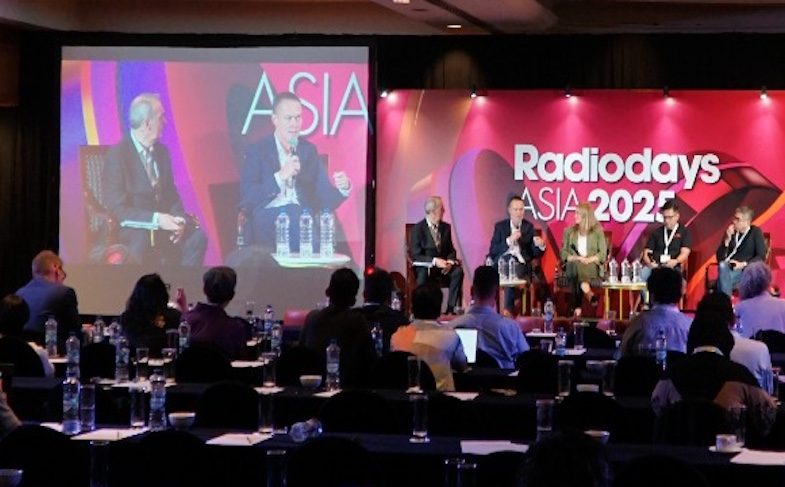
Steve Ahern’s in-depth discussion with leading media CEOs is becoming a regular feature of RadioDays conferences. He asks them to keep a record of the worries, ideas and inspirations that keep them awake at night and make notes about that for discussion at the RadioDays conferences.
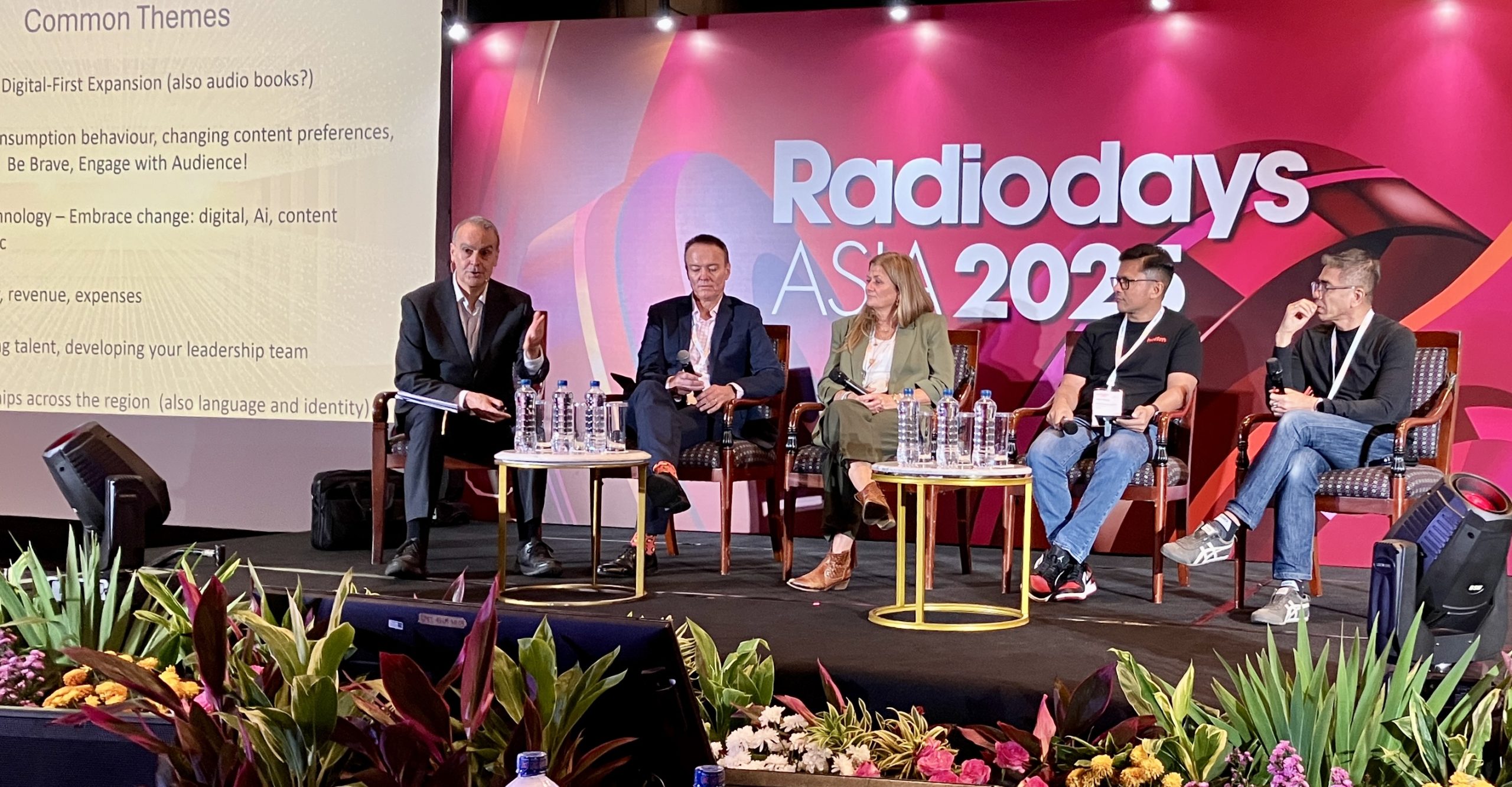
This year at RadioDays Asia, four CEOs joined Ahern for a deep discussion of their worries, ideas, hopes and inspirations. They were: Nazri Noran, Chief Executive Officer of Media Prima Audio Malaysia, Adrian Syarkawie, Chief Executive Officer of Mahaka Radio Integra Indonesia, Cathinka Rondan, Head of Audio at NRK Norway and Stuart Watt from Stuart Watt Strategy & Leadership
Nazri Noran’s top of mind issues were:
- Digital-First Expansion – Transforming from traditional radio into a fully integrated digital audio platform, including podcasts, streaming, and on-demand content.
- Content Personalisation with AI – Using data and AI to deliver personalised content and deepen listener engagement. Launched Malaysia’s First AI DJ Aina.
- Strategic Partnerships & Regional Growth – Building alliances with regional players and global platforms to expand reach and monetisation.
- Diversifying Revenue Streams – Growing income through branded content, live events, and digital advertising beyond traditional airtime sales.
- Talent & Culture Development – Investing in talent and culture to stay innovative, agile, and competitive.
Adrian Syarkawie:
- Is Radio still Radio? We need to find how to run a Radio business in other ways.
- Audience / listener behaviour is very fast changing. How fast do we need to move to improve?
- Research and Development is a must.
- Is Digital the solution? We need to understand how to use Digital or it can kill us.
- Focus on Cashflow.
Cathinka Rondan:
- Stronger together – in global competition we need to collaborate to become stronger and reach out. In Norway we work together with other editorially controlled media to raise the consciousness of the importance of free press and first party platforms.
- Be brave – the media market is changing so fast it is necessary to change much faster than before, the things you are thinking about doing, you probably should have done yesterday.
- Be clever in how to meet the generational gap in habits – How to personalize content and publication and at the same time gather the audience in a common experience.
- Talent – a 360 degrees service for the audience and the talent. Audience today follow people and talent more than companies and brands, you have to have talent to attract especially young audiences, and therefore it is important that you plan for a good workplace where you plan a future with them where they evolve and thrive.
- Engage with the audience. Be curious about them (as Nokia said on why they failed – we forget to listen to the audience, we thought we were smarter than them).
Stuart Watt:
- Develop and maintain a laser focus on audience regarding: (a) The content they are interested in, and (b) The way their media consumption habits are changing. Apply this to both the audience you have now and the audience you aspire to have and use it to frame decisions.
- Do the hard work to identify the organisation’s purpose, the key challenge you face and the strategy you are going to put in place to overcome that challenge.
- Find ways to elevate the voices of emerging leaders in your organisation and fast-track their progress.
- Have the courage to flip the narrative so your key decisions are made with the needs of on-demand audio uppermost in your mind over the linear radio output.
- Support your managers so they become great leaders, developing a work culture that allows your people to flourish.
In the discussion that followed, the power of the word ‘radio’ was debated from various viewpoints:
“Radio is still a powerful word, but could it be more sexy”
“Radio has become digital, do we need to reflect that somehow in the way we promote ourselves.”
“We are putting too much energy into thinking that ‘radio’ is old, it is still a powerful word, let’s be confident about it and put our energy into changing it for the future.”
“While we are soul searching, other businesses want to take the word ‘radio’ away from us, they realise it is still a powerful word.”
“Our competitors are trying to make radio seem old and obsolete, but the word is already reinvented in the new environment. The problem is that we fall into the marketing trap of letting our competitors position the word we own in a negative way. For example, why do we accept the terminology ‘legacy media?’ You leave a legacy in your will after you are dead. Falling for this positioning language that is used by our digital media competitors just leaves us vulnerable.”
“Heritage media could be ok but not ‘legacy’ media. ‘Responsible’ media is an even better way to distinguish us from the irresponsible platforms that publish first and check later, we check first then publish.
“We are ‘editorially controlled media,’ this is a term we use in Europe, we take our responsibility seriously.”
“Radio needs to position itself to be part of the storytelling ecosystem.”
“Radio has created a two way dialog for many years, but we must evolve further to create our content with our audiences in a two way experience.”
“Audio now describes the bigger ecosystem we are in, but ‘radio’ still defines the free to air/streaming broadcasts.”
Advance tickets sales have just opened for RadioDays Europe in Lativa, 22-24 March 2026
Steve Ahern is CEO of the training company AMT Pty Ltd and managing editor of the international Radioinfo, Podcastinfo and Audioinfo trade journals.