
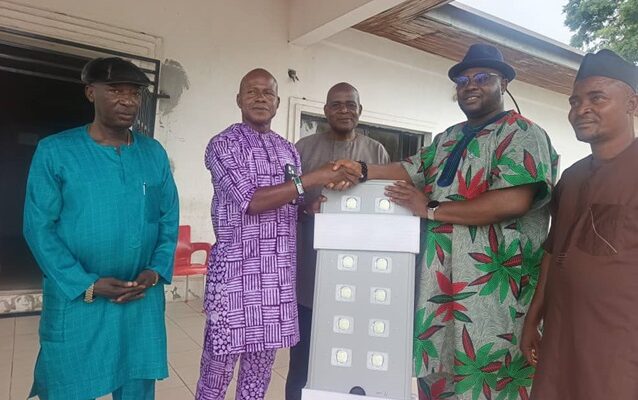
A state lawmaker in central Nigeria has donated solar panels to a local radio station, amid growing efforts to sustain broadcasting in areas facing persistent power challenges.
Jibril Abu, who represents Ajaokuta constituency in the Kogi State House of Assembly, delivered the solar energy system to Prime FM Jimgbe, a station under the Federal Radio Corporation of Nigeria network.
The donation fulfills a pledge Abu made during an appearance on a live radio program focused on governance and grassroots engagement.
The installation of solar panels is expected to provide a more reliable energy source for the station, which operates in a region where inconsistent electricity supply often disrupts broadcasting.
Access to stable power remains a major challenge for many radio stations across Nigeria, particularly in rural and semi-urban communities where infrastructure gaps persist.
Media advocates say renewable energy solutions like solar power are increasingly critical to keeping stations on air and ensuring uninterrupted access to news and public information.
Idris Miliki Abdul, Executive Director of Conscience for Human Rights and Conflict Resolution (CHRCR), who witnessed the donation, praised the initiative and called on others to follow suit.
“Media are the mirror of society and need support to perform their constitutional responsibilities,” he said.
The Initiative for Grassroot Advancement (INGRA), which co-organized the program where the pledge was made, also urged private sector actors and individuals to invest in local media institutions.
For stations like Prime FM in Kogi State, such interventions can make a significant difference. Reliable electricity not only improves broadcast consistency but also enhances the quality of programming and newsroom operations.
Analysts say the move reflects a broader recognition of radio’s enduring role in Nigeria, where it remains one of the most accessible and trusted sources of information, particularly in underserved communities.
As economic and infrastructure pressures continue to affect media operations, targeted support like Abu’s donation may prove essential in sustaining community-focused broadcasting across the country.