
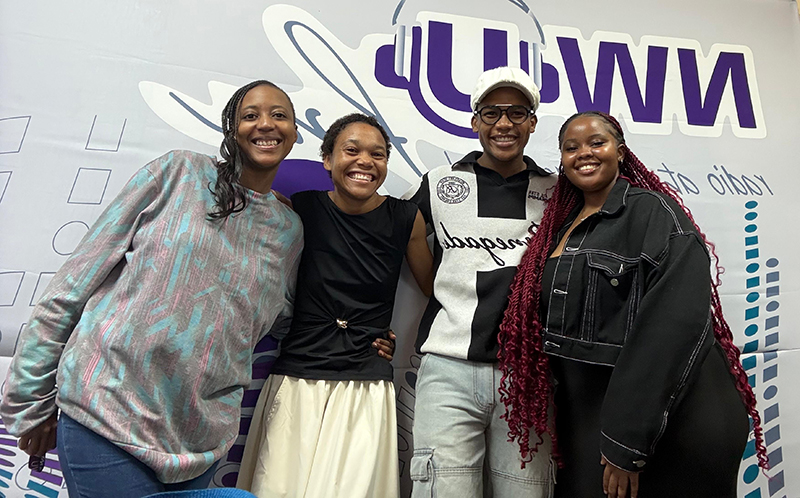
In a major milestone for cross-border student media collaboration, North-West University’s campus radio station, NWU FM, hosted a historic multi-nation simulcast connecting six African university radio stations to commemorate Africa Day.
The broadcast, which aired on May 25, 2026, linked student broadcasters and listeners across South Africa, Botswana, Namibia, Uganda, Eswatini, and Kenya. The project aimed to foster continental unity and provide a shared platform for African youth to discuss identity, future aspirations, and systemic regional challenges.
The participating network of campus stations included NWU FM (North-West University, South Africa), UB Radio (University of Botswana), UNAM Radio (University of Namibia), VU Radio (Victoria University, Uganda), UNESWA FM (University of Eswatini), and UNCRadioKE (University of Nairobi, Kenya).
The initiative was spearheaded by NWU FM Station Manager Kamo Ledwaba-Maodi and on-air presenter Batsiba as part of the station’s broader 2026 programming campaign highlighting the development and power of radio.
According to Ledwaba-Maodi, the project was designed to break through traditional broadcast borders to analyze the shared realities of African students.
“The objective was to hear from students across Africa about what this day means to them, what their hopes, fears, and aspirations are,” Ledwaba-Maodi stated. “We learned that while we have many differences, we have even more in common.”
The technical and organizational coordination required to link the six stations has also established a permanent framework for future communication. Ledwaba-Maodi noted that the station managers and production teams have maintained an active network to facilitate ongoing program exchanges and peer learning.
Addressing Continental Challenges Through Audio
The broadcast was officially opened by Dr. Joe Molete, NWU Deputy Vice-Chancellor for Student Life, Transformation, People, and Culture (Mahikeng Campus). Molete commended the student broadcasters for executing a complex continental collaboration and emphasized radio’s enduring capability to unite communities across vast geographical distances.
Molete challenged the participating student panels to use the broadcast to discuss practical solutions to critical social issues, including recent continental challenges such as xenophobic unrest.
“Radio has the power to connect students even beyond borders,” Molete said during his opening address. “The students are the ones who can come up with ideas on how best to handle the recent challenges.”
The success of the multi-country simulcast highlights a growing trend of internationalization among African campus stations, demonstrating how localized student media can scale up to drive regional dialogue and cross-cultural media development.