
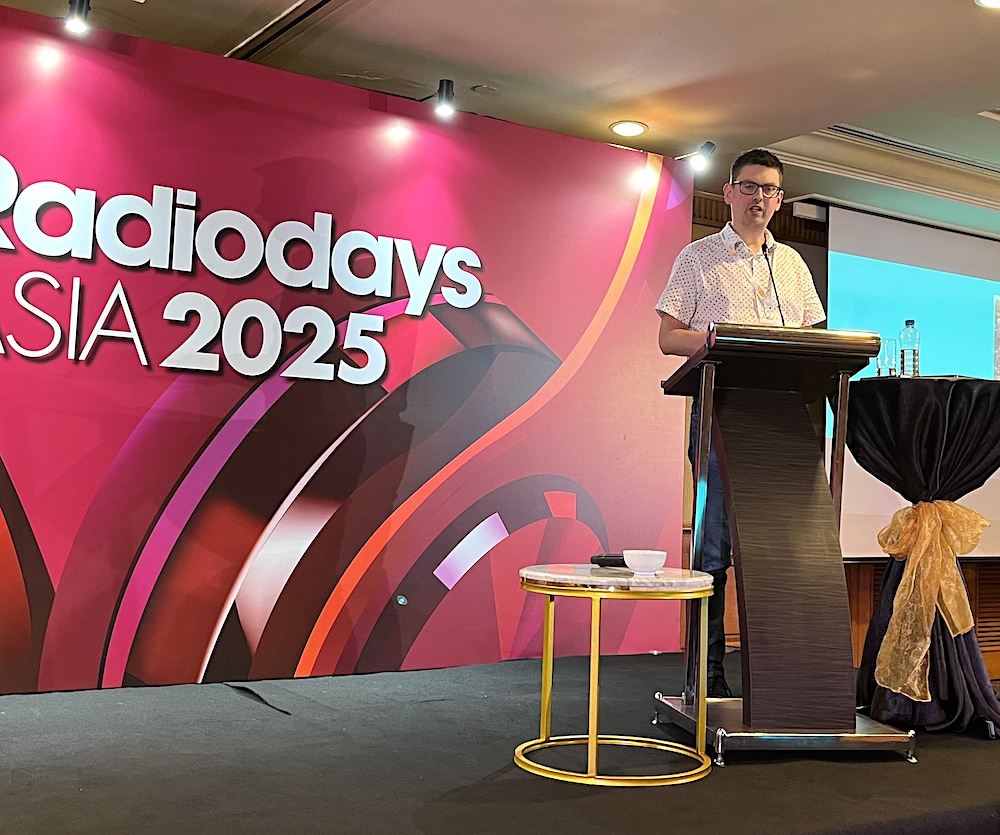
“Station branding explains who you are and reinforces to your listeners that they have made the right choice,” said Chris Stevens in a Radiodays session on imaging.
Chris is co-owner of the international jingle and branding company TM Studios. He has spent 25 years helping radio stations improve their branding and station sound and he also founded the UK’s first DAB country music radio station.
In a conference session rich in training tips, Chris gave good advice about the psychology behind imaging, as well as practical tips about production.
“Station branding is consistent, has messages and sounds human. It should also match your visuals.
“Don’t be generic, be unique and keep the momentum moving on the radio station,” said Stevens.
When thinking about imaging, an important questions to ask is ‘how does your radio station make you feel?’
There has been a change from the old method of “telling people what we did on air” to now linking the messaging to what they feel. Messaging has moved from ‘playing you the hits and memories,’ or ‘number one hit music station,’ to words that describe how the station makes you feel, such as ‘feel good,’ or ‘relax.’
News and information stations can bebefit from slogans that are factual messages, while entertainment stations appeal to the emotions, for example Heart’s slogan, ‘turn up the feel good.’
Factual and emotional messages have better recall for branding than just telling them what you do/play. Then messaging and all the other elements on the station have to be consistent with listener expectations. For example, London’s Capital FM, that appeals to younger demographics, did not celebrate the station’s 50 years because they didn’t want to appear old to their listeners. Capital decided that it was not relevant to the listeners how old the stations was.
BBC Radio One, also a younger new music station, started a Vintage Pop Up station to celebrate their 50 years, because the main station would have got a ‘so what’ response if they did it on that station. It was a good strategy because former Radio One listeners who had aged out of the station could re-live their younger years without replays of old shows and songs being on the contemporary channel.
Stevens displayed his Voice Pyramid, to explain how to use station voiceovers.
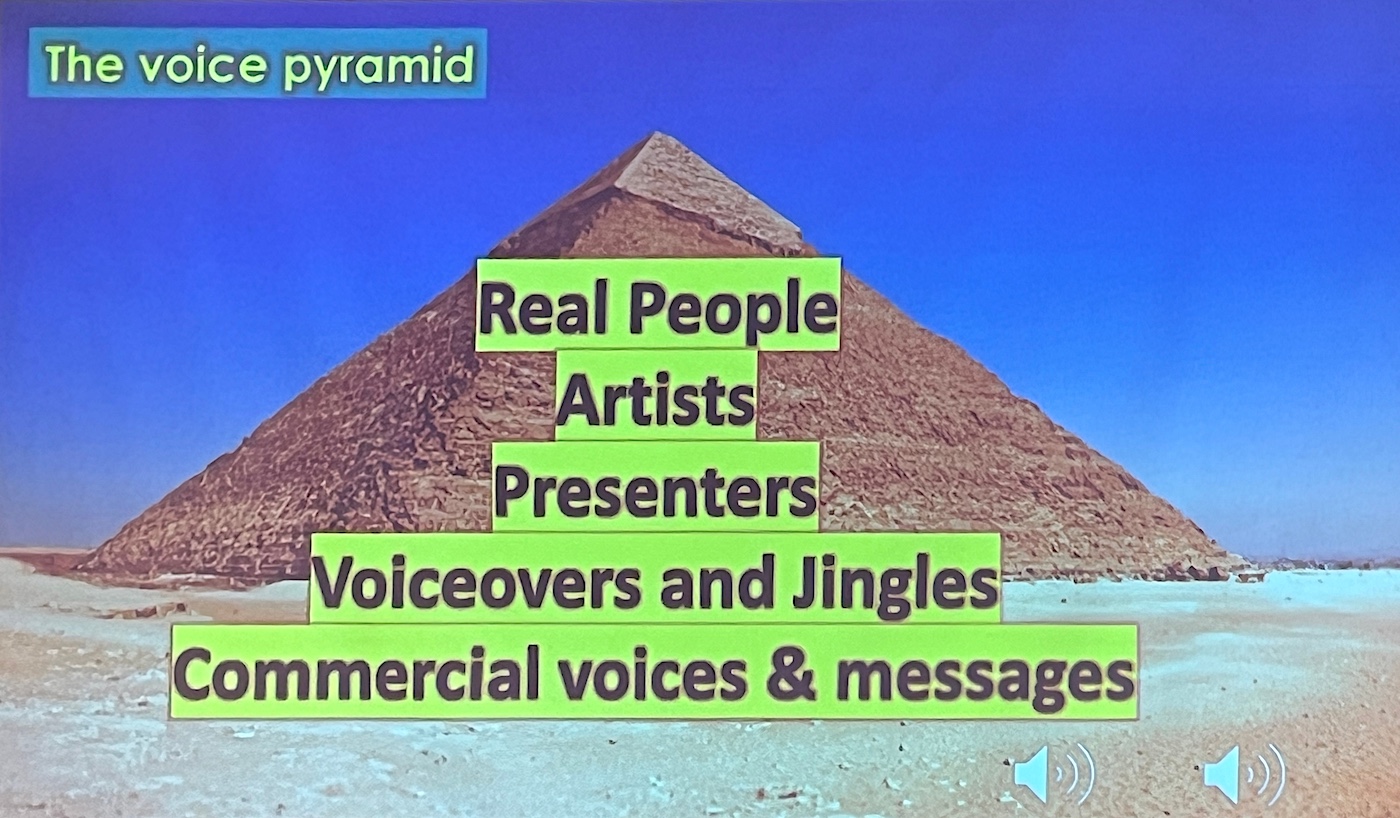
At the top of the pyramid is the most desirable voice for listeners to hear, real people like themselves, while other types of voices are useful for other purposes.
Do you have the right station voice? asked Stevens. “Test it when doing research. Ask questions like: ‘would you want to have a coffee with this VO artist?’ and ‘do you trust this person?’ In one research session, participants were asked to ‘draw what the voice looks like.’
“Imaging should be unique. It should not be generic. Ask yourself what works for you and the lives of your listeners. If it is just generic it’s a waste of time,” he said.
He also encourages presenters to play with the audio tools at their disposal to make their show sound unique. He gave the example of Matt Wilkinson’s Taylor Swift manipulation.
View this post on Instagram
“Know your playout system. Know what you can do like @wilcosnaps.”
“When you load a new song how many versions do you load into your playout system? Most music directors load only one, but there are now many versions available, some stations load several versions to bring variety. There might be versions with extended intros for voiceovers or announcer talk-overs, or no intro so you get straight back to the music.”
A current popular technique is to lob off the instrumental intro to get straight back into the song vocals after an ad break. “This is good for listeners who are trained on Tiktok to want tight segues,” he said.
“Jingles work! Audio is retained longer than visual cues. It aids recall,” said Stevens.
Other tips include:
Build Reputation. “Promo what you station did, will do and what it stands for.”
Smart scheduling. “Don’t play a Monday breakfast promo on Saturday, listeners don’t want to think of work on their day off.”
Reporting & Pictures: Steve Ahern