
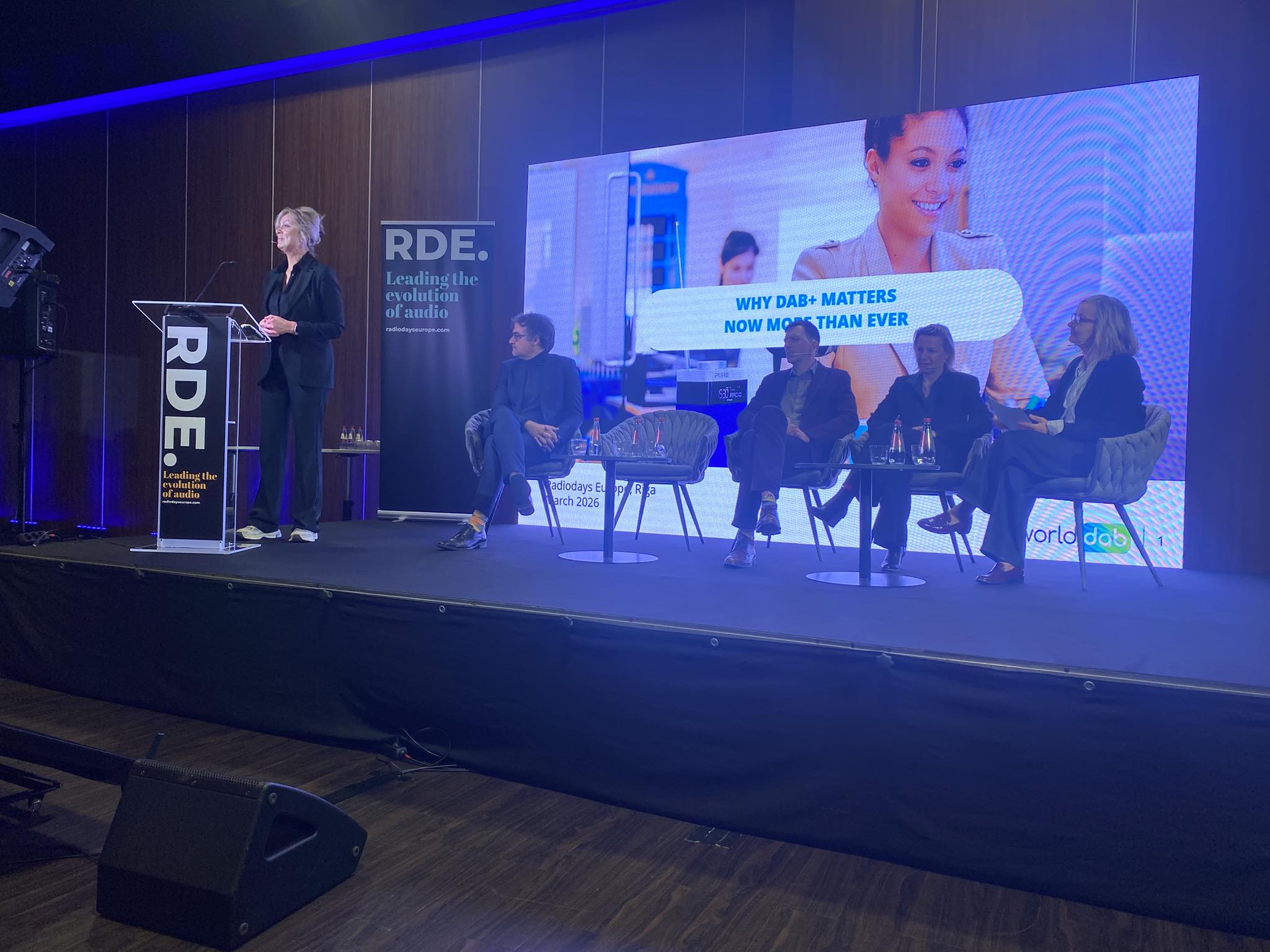
Jen Seyderhelm is at Radiodays Europe, being held from March 22-24 in Riga, Latvia.
With Australia having so many digital radio and DAB+ options it was astonishing to discover some European countries are only now at the ‘interested’ stage of approaching the medium.
The building of that infancy stage was part of the focus of a Why DAB+ Matters session facilitated by Bernie O’Neil (Project Office Director) and Jacqueline Bierhorst (President) from WorldDAB. But the broader implications globally are significant as Jacqueline had said that she had been told, on more than one occasion at the conference, that DAB+ was dead.
Part of the issue has been the complete roll out of DAB+ in Switzerland. The nation switched off outdated analogue FM transmitters on the 1st of January 2025. But the backlash was such that at the end of last year a vote was called to stop the planned deactivation. That motion narrowly won and now those FM channels have been able to continue operating until at least the end of 2031 with a new tender for the allocation of FM licences from January 1, 2027.
So now nations are hesitant, despite countries like the Netherlands and England seeing revenue and audience gains from more diverse offerings from their networks.
Australia and parts of Asia are seen as the leaders in digital radio. Some European countries’ digital migration is complete and, with Estonia’s highest point just 300 metres, the ability to capture large areas with ease, straight forward. But some surprising countries, like Ireland and Portugal for example, are still just trialling DAB+. An interesting contrast to us where we see an ever-increasing number of stations popping up in the GfK Radio 360 Surveys, including four new in Survey 1, 2026.
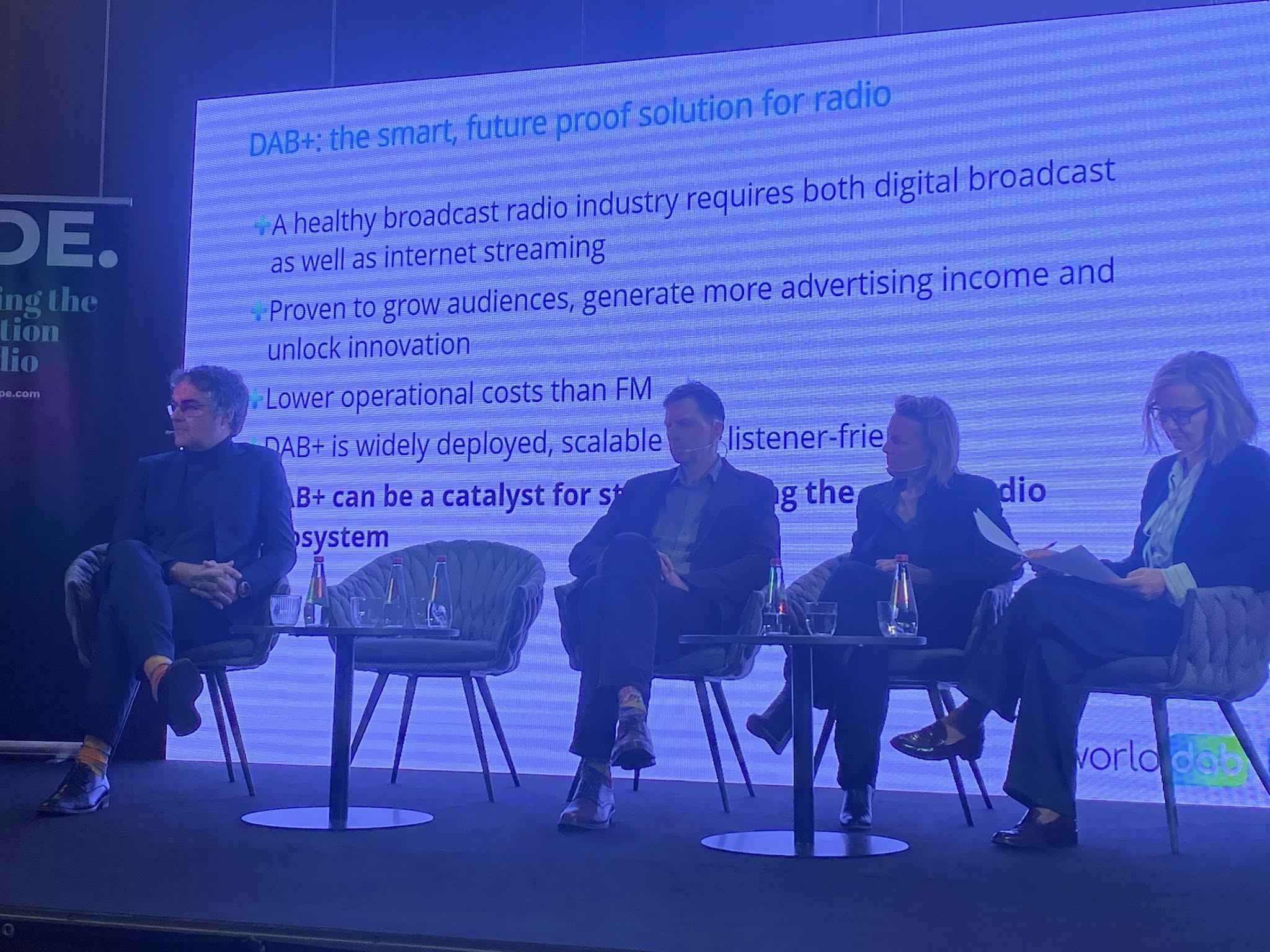
The panel included Sara Jacobi representing Belgium’s Digitale Radio Vlaanderen, Priit Vare, Head of Radio with Duo Media Works, which operates TV and radio stations across the Baltic with 14 stations in Estonia, and David Fernandez Quijada, a Research Director currently completing a public policy toolbox around the uptake of DAB+ to facilitate the licencing, transmission and reception process for countries and, in his words, ‘make radio policy sexy again.’
Estonia is an interesting case, not only due to its flatness but also due to not having smart speaker so listening online had stalled. Priit said they only rolled out DAB+ in September last year and initial DAB+ numbers have been promising.
Sara’s case in the Flemish region of Belgium was even more positive. In 2018, 76% of the audience measured listened only to FM. With the roll out of DAB+, and near 100% coverage, last year just over 50% of the same audience were choosing digital first.
Jaquline had recently been in Lithuania, spending an evening 120 floors in the air in a beautiful building to celebrate 100 years of radio in that country She said that radio there had a beautiful past and was look forward towards an equally beautiful future.

The building where Jaqueline celebrated 100 years of radio in Lithuania
She spoke of French National Radio who had seen audiences triple over the last 10 years with the incorporation of digital. Absolute Radio in the UK were able to expand to include niche genre DAB+ stations like Triple M for example has done in Australia. That network got rid of AM last year and achieved its highest ever audio revenue. In Germany they have launched, via DAB+ and Automatic Safety Alert (ASA) that plays out when there is an emergency situation.
She said that the macro reasons for DAB+ were the three Es
Emergencies – as demonstrated in the ASA above. Digital radio is resilient in such situations
Environmental – DAB consumes significantly less energy than FM, and
Economic – There is also a lower operating cost and is free, with no gatekeeper
There is also the incremental financial gains from additional platforms that support advertising and sponsorship.
In these troubled times Jaqueline and Bernie said wherever DAB+ is implemented it can support national, regional and local audiences. It protects language, culture and freedom. A healthy broadcast radio industry should be able to incorporate traditional linear radio, internet streaming and digital broadcasting.